
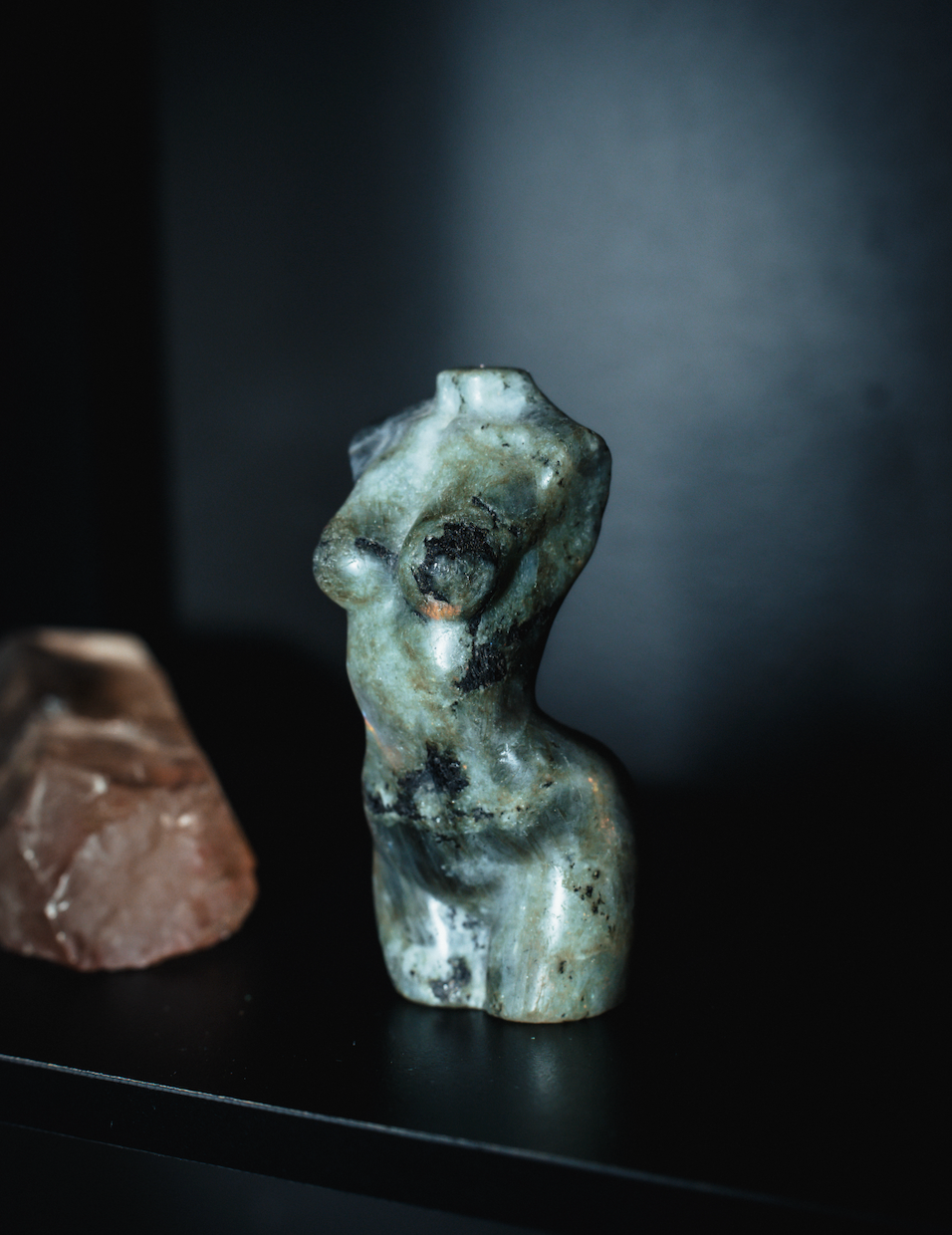
How to Build a Balanced Crystal Range
A balanced crystal range is not necessarily the largest range.
It is a collection where the stock you hold has a reason for being there.
For retailers, buying wholesale crystals means balancing what customers already know and love with pieces they have not discovered yet. It means having enough of your reliable sellers without tying up too much money in stock. And it means creating choice without trying to become everything to everyone.
At Opal and Onyx Australia, we believe a strong retail range develops over time. You start with a considered foundation, listen carefully to your customers and team, and refine the collection as you learn what genuinely works in your store.
Know what role crystals play in your business
The right range begins with understanding your own business.
For a dedicated crystal or metaphysical store, customers may expect substantial choice and regular new discoveries.
For a gift or lifestyle retailer, crystals may form one part of a much wider collection.
For a wellness business or practitioner, the range may be more closely connected to the work being offered — meditation, energy work, ceremony, treatment spaces or products clients can take home.
There is no ideal number of crystals that every retailer should carry.
The range needs to make sense for the space you have, the customers you serve and the amount of your business you want crystals to represent.
Separate your core range from your discovery range
One of the simplest ways to create balance is to think of your collection in two parts.
Your core range contains products you want customers to be able to find consistently. These may be recognisable crystals, established sellers or products that have proven themselves within your store.
Your discovery range gives you room to experiment.
It may include:
- newly sourced minerals
- unusual specimens
- limited collections
- products you have not previously stocked
- emerging crystals
- pieces selected simply because they have an extraordinary presence
The core provides reliability.
The discovery range creates curiosity.
Neither needs to dominate the other.
At Opal and Onyx, this is an important part of how we think about wholesale buying. We want our retail partners to be able to replenish products that work for them while still having access to pieces that give customers a reason to come back and look again.
Buy deeper into what has earned it
Not every product deserves the same stock commitment.
If a crystal sells consistently and you understand why your customers buy it, carrying greater depth may make sense.
If you are trialling something new, start more carefully.
This sounds obvious, but beautiful products can make it surprisingly easy to overbuy.
The purpose of a balanced range is not to have equal quantities of everything.
It is to have the right quantity for the role each product plays.
A dependable seller may warrant several pieces or regular replenishment.
A higher-value specimen may justify only one.
A completely new mineral might begin as a small test.
Let your buying depth reflect what you know rather than what you hope.
Make sure your range gives customers somewhere to start
Not every customer enters a crystal store with the same level of knowledge or the same budget.
Some know exactly what they are looking for.
Others are curious but unsure where to begin.
Some want a small gift.
Others have been collecting crystals for years and want something they have never seen before.
A balanced retail range should make space for all of them.
Think about having accessible entry points, a strong middle section to the range, and some more significant products for collectors or customers ready to invest in something special.
Price is not the only consideration, but it is an important one.
If almost everything in your store sits at the same price level, you may be making it harder for customers to find a comfortable place to enter the collection.
Consider what your customers are buying crystals for
Another useful way to look at your range is by customer purpose rather than simply mineral type.
Are people coming to you for:
- gifting?
- meditation or spiritual practice?
- home and interiors?
- collections?
- wellness or ceremony?
- jewellery making?
- smaller everyday pieces?
- significant feature specimens?
A customer purchasing a birthday gift may approach the range very differently from a practitioner choosing products for a workshop.
This can help you identify gaps that are not immediately obvious when you only look at a product list.
You may have plenty of crystals — but very little suitable for gifting.
Or a beautiful collection of larger pieces but not enough accessible products for someone making their first purchase.
Looking at why people buy can be just as useful as looking at what they buy.
Give proven products time before constantly replacing them
Retail is always looking for what is new.
And newness matters.
But continually changing a range before products have had the opportunity to establish themselves can make buying unnecessarily complicated.
Some crystals will sell immediately.
Others need the right placement, staff knowledge or customer conversation before they begin to move.
Before deciding something is not working, ask whether your team understands it.
Has it been properly displayed?
Has it had enough time on the floor?
Are customers noticing it?
Sometimes a product needs a better story rather than replacing.
Use new stock to refresh rather than rebuild
Keeping a crystal collection interesting does not require replacing the whole range.
Often, a relatively small number of new pieces can make an existing collection feel fresh again.
Introduce a new mineral.
Bring in a small collection from a recent sourcing trip.
Add a limited number of unusual specimens.
Refresh a feature area.
Even moving existing pieces into a different story or collection can encourage customers to see them again.
We covered colour, different forms and feature specimens more deeply in our guide to the best crystals to stock in a crystal shop, but they are worth keeping in mind here as part of the overall balance rather than treating them as the foundation of the buying decision.
Listen to your sales team
Your sales team often knows things your stock report does not.
They hear the questions.
They know what customers nearly bought.
They know which products people repeatedly ask about.
They also know which crystals they personally find easy to speak about with enthusiasm.
At Opal and Onyx, we encourage retailers to include their sales team in these conversations.
Ask them:
What are customers requesting?
What do we keep running out of?
What are people asking for that we do not have?
What do you love selling?
What are customers picking up but putting back?
That information can make your next wholesale order considerably more useful.
Review the range rather than simply just reordering it
A reorder should be an opportunity to learn.
Before placing the next wholesale crystal order, take a little time to look at what happened with the last one.
What moved quickly?
What deserves greater depth?
What did not perform as expected?
What did customers repeatedly ask for?
What are you ready to trial next?
At Opal and Onyx, our Relationship Management team can work with retail partners to talk through their range, look at areas they would like to strengthen and help identify products that may complement what is already performing.
Sometimes the best addition to a range is not another version of what you already have.
It is the piece that fills the gap you had not noticed yet.
A balanced crystal range is not something you build once.
It evolves with your customers, your team and your business.
Keep your reliable foundations.
Make room for discovery.
Buy more deeply when the evidence supports it.
And keep refining.
Because when it comes to wholesale crystals for retailers, balance is not about having a little of everything.
It is about knowing why you are stocking what you stock.


