
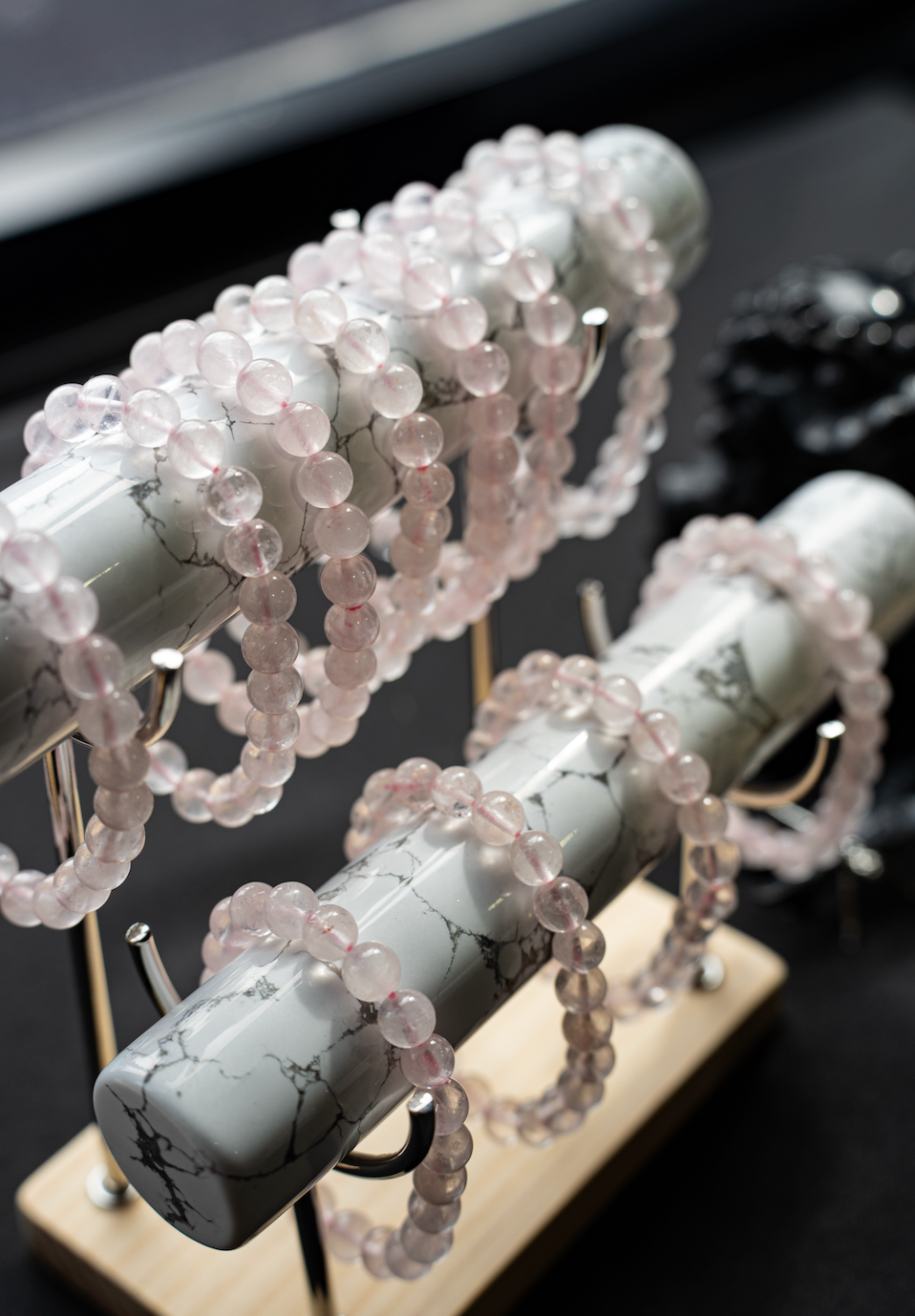
For an artisan, the crystal is not always the finished product.
It is the beginning of it.
Jewellery makers, designers and creators of ceremonial or decorative pieces approach crystals differently from a traditional retailer. A piece may need to fit within a setting, complement other materials, be repeated across a collection or become part of something completely new.
When sourcing wholesale crystals for jewellery making, beauty still matters — but so does consistency, dimensions, durability, availability and cost.
The right materials need to work both creatively and commercially.
Start with what you are making
Before buying crystals wholesale, begin with the finished product.
Are you creating jewellery?
Ceremonial or ritual tools?
Decorative objects?
Small-batch collections?
One-off statement pieces?
A jewellery maker producing twenty pieces from the same design will have very different requirements from an artisan creating individual, one-of-a-kind objects.
Think about the role the crystal will play.
Does it need to fit within a particular setting?
Will it be drilled, wrapped, set or incorporated into another material?
Do you need several pieces that look relatively similar?
Or is natural variation actually part of the beauty of the collection?
Knowing the end use makes wholesale buying far more intentional.
Consistency matters — but nature is rarely identical
One of the challenges of working with natural materials is that crystals do not come off a production line.
Colour, markings, inclusions, shape and size can vary.
For many artisans, that variation is part of what makes working with crystals so appealing.
But there are times when consistency becomes important.
If you are creating a repeatable jewellery style or a small production run, you may need pieces within a reasonably similar size or shape range.
That does not necessarily mean identical.
It means understanding what level of variation your design can accommodate.
When speaking with a wholesale crystal supplier, be clear about what matters most to you. Measurements, approximate sizing, finish and quantity may be much more important to a maker than they are to someone purchasing a single retail specimen.
Understand the material before designing around it
Different crystals behave differently.
Some are harder and more robust.
Others may have natural cleavage, fine formations or delicate surfaces that make them less suited to heavy handling or certain production techniques.
If you are planning to cut, drill, wire-wrap, set or otherwise work with a crystal, understanding the material matters.
The most visually beautiful piece is not always the most practical one for the intended design.
That is why it can be useful to work with a wholesaler who understands the difference between supplying crystals for display and supplying materials that will become part of another product.
If you are unsure, ask.
It is better to adjust a design before production than discover halfway through that the material is not suitable for the way you intended to use it.
Buy enough to create a cohesive collection
Small-batch makers often sit somewhere between retail buying and bulk purchasing.
You may not need hundreds of pieces, but buying one or two at a time can make it difficult to create consistency across a collection.
When you find a material that suits your work, think ahead.
How many pieces are required for the first collection?
Will you need additional stock for replacements or future orders?
If the product sells well, can you source something similar again?
Would natural variation strengthen the collection, or make it difficult to reproduce?
These questions become particularly important if you are wholesaling your own finished products to stores.
Retailers may expect you to be able to repeat a design, which means your own access to materials needs to be reasonably dependable.
Factor your crystal cost into the finished product
When buying wholesale crystals for jewellery makers, it is easy to focus on the beauty of the materials and forget the finished-product economics.
The crystal is only one component.
Your final price may also need to cover:
- additional materials
- packaging
- labour
- design time
- equipment
- wastage
- freight
- selling costs
- wholesale margin, if you supply other retailers
A beautiful crystal that pushes the finished piece outside the price point your customer will pay may not be commercially workable for that particular collection.
This does not mean always buying the least expensive material.
It means matching the material to the product you are creating.
Some designs deserve a higher-value stone.
Others may need a more accessible crystal to keep the finished piece commercially realistic.
Leave space for one-of-a-kind pieces
Repeatability matters for some makers.
For others, individuality is the whole point.
A unique crystal formation, unusual mineral or unexpected inclusion can become the inspiration for a single piece rather than something you need to reproduce.
These are often the materials that give an artisan collection personality.
At Opal and Onyx, we believe there is value in both.
Reliable materials can support repeatable designs, while unusual crystals and one-off specimens can become the starting point for pieces that could never be made exactly the same way twice.
Sometimes the crystal tells you what it wants to become.
Let your creative identity influence what you buy
Not every maker needs the same minerals.
Your wholesale buying should reflect your own design language.
If your work is minimal and refined, you may naturally gravitate towards a very different crystal selection from someone creating bold ceremonial pieces or highly textured jewellery.
Notice which materials you enjoy working with.
Which crystals suit your craftsmanship?
Which ones feel at home beside the metals, fibres, woods or other materials you already use?
And which pieces generate the strongest response from your customers?
Over time, those preferences can become part of what makes your work recognisable.
The aim should not be to use every crystal available.
It is to build a material palette that feels like yours.
Work with a wholesaler who understands the maker’s process
An artisan is not simply purchasing stock to place on a shelf.
You are sourcing raw material for a creative process.
That means the questions you ask may be quite specific.
You may need dimensions.
You may want to see several pieces together.
You may need a certain quantity within a similar size range.
You may be looking for an unusual material for a new design.
Or you may simply want someone to keep an eye out for something particular on a future sourcing trip.
At Opal and Onyx Australia, our Relationship Management team welcomes these conversations.
Where practical, our team can help makers view pieces more closely, discuss available quantities and consider materials that may suit the type of collection they are developing. For those unable to visit the Gold Coast showroom, a video appointment can also make the selection process much easier.
Let the material become part of the story
One of the beautiful things about handmade work is that customers are often interested in more than the finished object.
They want to know how it was created.
Why that material was chosen.
What makes that particular crystal interesting.
Where the inspiration came from.
When you work with crystals you genuinely understand and appreciate, those stories become much easier to tell.
And they add depth to the finished piece.
When sourcing wholesale crystals for jewellery making and artisan work, choose materials that make sense practically, commercially and creatively.
Know what your design needs.
Understand the natural variation.
Buy enough where consistency matters.
Leave room for one-off discoveries.
And choose crystals that inspire you to make something worth keeping.
Opal and Onyx are known for working closely with artisans and with their suppliers they can source exactly what you are after, talk to our team today.


